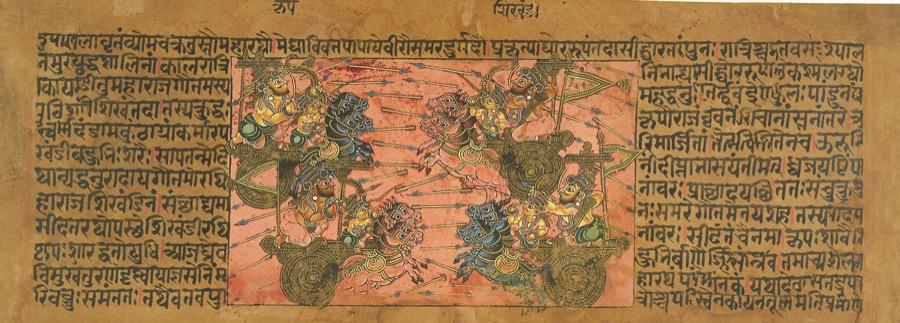
Kurukshetra
Shikhandi
Amba reborn · breaker of a vow
Born as Amba, denied marriage and vengeance in one life, reborn to fulfil a destiny that would reshape the thirteenth day of war—and the meaning of dharma under impossible vows.
In an earlier life Shikhandi was Amba, eldest daughter of the king of Kashi. Bhishma, bound by his vow of celibacy and his duty to Hastinapura, carried her away with her sisters for Vichitravirya—but Amba had already chosen Shalva. When Bhishma returned her, Shalva refused her. Amba turned to Bhishma himself; he could not marry. Her rage became tapas. Shiva granted her a boon: in her next birth she would be the cause of Bhishma's fall.
Reborn to Drupada, she was first a girl named Shikhandini. Raised as a prince, she later gained manhood through divine exchange—becoming Shikhandi. On the battlefield of Kurukshetra, Bhishma would not fight one who had been a woman; Arjuna stood behind Shikhandi, and the grandsire's long resistance ended.
Shikhandi is often reduced to a tactical footnote. Read fully, the story asks: what happens when vows, gender, and justice collide across lifetimes? The Gita's field is not only chariots and arrows—it is the weight of choices made before the dialogue with Krishna even begins.
The war in which Shikhandi acts unfolds on the same plain where the Gita is spoken—duty, identity, and consequence interwoven.
Illustration: Wikimedia Commons · Mahabharata manuscript (public domain)